 Skip-the-line available
 What to See at the Egyptian Museum in Cairo
The great statue halls, the royal jewellery, the papyri and the sweep of pharaonic art in the world's first national museum of the Middle East.
The historic Egyptian Museum on Tahrir Square holds one of the world's greatest collections of pharaonic antiquities, well over 100,000 objects across two floors — far more than anyone can see in a single visit. This highlights guide walks you through what to prioritise: the great statue halls of the ground floor, the royal jewellery and painted coffins on the upper floor, the papyri and everyday objects, and the sweep of more than three thousand years of ancient Egypt. It is the historic museum downtown, opened in 1902, not the Grand Egyptian Museum at Giza, and its galleries reward focused looking rather than trying to see everything.
What are the great statue halls at the Egyptian Museum?
The great statue halls of the Egyptian Museum's ground floor are the heart of the collection and the best place to begin. Here the galleries are arranged broadly by period, filled with monumental sculpture: colossal royal statues, seated pharaohs, temple reliefs and granite figures that trace the art of ancient Egypt from the earliest dynasties through the Old, Middle and New Kingdoms to the Greco-Roman age. The sheer scale of these works is one of the most powerful impressions the museum leaves, and the grand central halls of the 1902 building were designed expressly to show them off. Our concierge recommendation is to walk the ground floor first, giving the largest statues room to make their effect, before climbing to the smaller treasures upstairs. Even a brisk pass through these halls is one of the great experiences in any museum in the world.
Walking the statue halls in roughly chronological order gives a vivid sense of how Egyptian art evolved over three millennia while keeping its unmistakable, instantly recognisable style. The ground floor of the Egyptian Museum displays the larger stone objects, arranged by period, so a route through them carries you forward through the dynasties. Look for the colossal figures of Egypt's most powerful kings and the early masterpieces of the Old Kingdom, when the conventions of Egyptian sculpture were first set. Because the collection on Tahrir Square runs to well over 100,000 objects, the statue halls alone could fill a visit, so pace yourself and pick a few galleries to study closely. The building, opened in 1902 as the first national museum of the Middle East, was purpose-built for exactly this kind of monumental display across its long, high central halls.
Where is the royal jewellery, and what should I look for?
The royal jewellery is among the finest small-scale treasures at the Egyptian Museum, and it is displayed in the galleries of the upper floor. Gold collars, amulets, rings, bracelets and pectorals show the extraordinary skill of ancient Egyptian goldsmiths, who worked precious metal and inlaid stones with a precision that still astonishes. These pieces reward slow, close looking, and the upper-floor rooms that hold them are generally quieter than the busiest ground-floor halls. Our concierge recommendation is to keep the jewellery for the second half of your visit, once you have taken in the monumental statues below, so you can give the fine detail the attention it deserves. Across two floors the historic museum on Tahrir Square holds well over 100,000 objects, and the goldwork is where many visitors find the craftsmanship most breathtaking of all.
Beyond the jewellery, the upper floor and side galleries of the Egyptian Museum hold a wealth of smaller treasures that round out the picture of ancient Egypt: painted coffins, carved wooden figures, ceremonial objects, cases of amulets and the everyday items buried for the afterlife. The first floor is where the museum arranges its smaller objects, including papyri and wooden sarcophagi, complementing the large stone sculpture on the ground floor. These rooms are typically calmer than the headline galleries, and they are where many visitors discover their personal favourites among the collection. Our concierge recommendation is to leave time to wander the side galleries rather than rushing to the exit, because the smaller objects tell the human story of ancient Egypt as vividly as the colossal statues below. Together the two floors span more than three thousand years of pharaonic civilisation.
What can I learn from the papyri and everyday objects?
The papyri and everyday objects at the Egyptian Museum offer an intimate window into ancient Egyptian life that the colossal statues cannot. Displayed largely on the upper floor, the collection includes papyrus documents, painted coffins, tools, cosmetic items, furniture and the small personal possessions placed in tombs for the afterlife. Together they show how ancient Egyptians lived, worked and prepared for death across more than three thousand years, from the earliest dynasties to the Greco-Roman age. Our concierge recommendation is to slow down among these cases, because the human detail — a child's toy, a scribe's palette, a jar of preserved food — often lingers in the memory longer than the grandest sculpture. The historic museum on Tahrir Square, opened in 1902, was built to hold exactly this breadth, from the monumental to the miniature, and its upper floor is where the everyday world of ancient Egypt comes alive.
The written record is one of the richest parts of the Egyptian Museum, and the papyri repay unhurried looking. Ancient Egyptian scribes recorded religious texts, administrative accounts, letters and funerary spells on papyrus, and the museum's collection preserves examples across many periods of the civilisation. Alongside them, carved stelae and inscribed objects carry the hieroglyphs that first let the modern world read the pharaohs' own words. Our concierge recommendation is to pair a look at the written material with the painted coffins nearby, since the two together reveal how belief in the afterlife shaped so much of ancient Egyptian art and daily practice. The upper floor of the 1902 building, where these smaller objects are arranged, is quieter than the great statue halls below, making it an ideal place to end a visit at a gentler pace.
How should I prioritise if I only have a couple of hours?
If you only have a couple of hours at the Egyptian Museum, focus rather than wander, because the collection of well over 100,000 objects cannot be seen in a single visit. Our concierge recommendation is to start on the ground floor with the great statue halls, walking them in roughly chronological order to feel the sweep of pharaonic art, then climb to the upper floor for the royal jewellery and a selection of the smaller treasures. Two to three focused hours is enough to leave feeling you have met the pharaohs. Arriving near opening gives you the busiest galleries in relative calm before the late-morning tour groups arrive. The historic museum on Tahrir Square, opened in 1902, rewards depth over breadth, so choose a handful of galleries and give them proper attention rather than trying to tick off every single room.
For a short visit, a simple route keeps you moving through the Egyptian Museum's best without backtracking: enter, take in the monumental sculpture of the ground floor, then head upstairs for the jewellery, papyri and painted coffins before finishing among the side galleries. Because the ground floor holds the larger stone objects and the upper floor the smaller ones, this bottom-to-top sequence follows the building's own logic. Our concierge recommendation is to carry water for the large halls, wear comfortable shoes, and keep an eye on the closing time so you are not hurried at the end. If your Cairo day also includes the Giza pyramids about 30 to 45 minutes across the city, a two-to-three-hour museum visit fits neatly alongside them, giving you both of the city's great ancient-Egypt experiences in one well-paced day.
Is the museum building itself worth seeing?
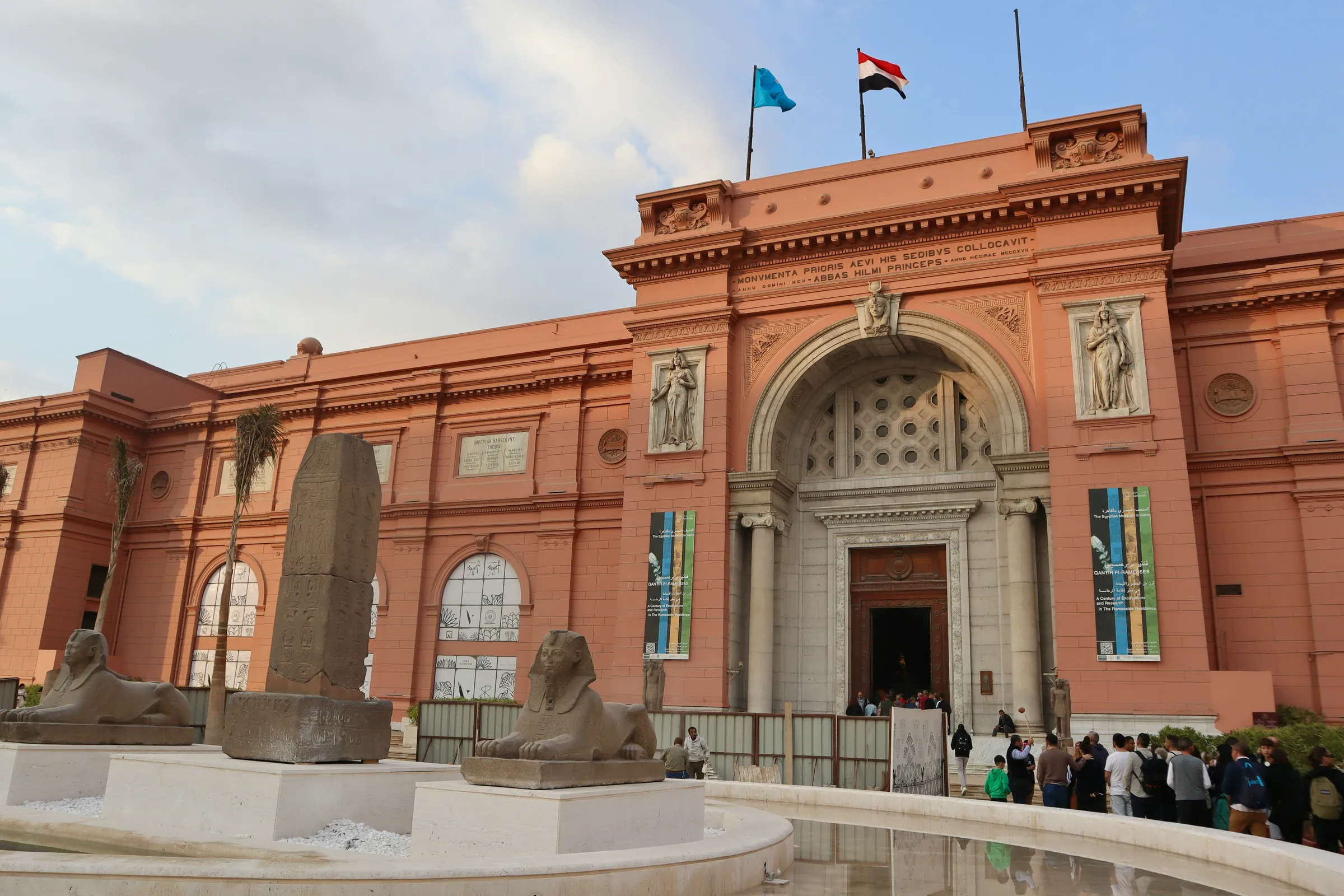
Yes — the building of the Egyptian Museum is a highlight in its own right, not merely a container for the collection. Opened on 15 November 1902, it is a grand salmon-pink neoclassical structure designed by the French architect Marcel Dourgnon and built by an Italian firm, standing on the northern side of Tahrir Square. It was the first purpose-built national museum in the Middle East, and its long, high central halls were designed expressly to display monumental Egyptian sculpture. Our concierge recommendation is to pause on arrival to take in the facade and the grand entrance before plunging into the galleries, and to notice how the architecture frames the great statues within. More than a century old, the museum is now a historic monument in its own right, part of the fabric of downtown Cairo as much as a home for the pharaohs.
The garden and forecourt of the Egyptian Museum are worth a few minutes before or after your visit. In the garden lies the tomb of Auguste Mariette, the French Egyptologist who founded the collection in the 19th century and who was reburied here among the antiquities he had gathered, in keeping with his wishes. The neoclassical facade, the ornamental grounds and the sense of a century of scholarship give the site a character quite different from a modern gallery. Our concierge recommendation is to treat the building and its garden as part of the experience rather than a threshold to hurry past. The historic museum on Tahrir Square, opened in 1902, carries the story of how the modern world first gathered and studied the treasures of ancient Egypt — a story written into the architecture itself.
Frequently asked
What are the must-see highlights at the Egyptian Museum?
The great statue halls on the ground floor and the royal jewellery upstairs are the signatures, alongside the papyri and painted coffins. Start with the monumental sculpture, then climb to the smaller treasures. Arriving early gives you the busiest galleries in relative calm.
Is the Tutankhamun collection still at the Tahrir Square museum?
The Tutankhamun treasures are being transferred to the Grand Egyptian Museum (GEM) at Giza, which was built to display them together. If seeing Tutankhamun's artefacts is your priority, confirm the current arrangements, as the flagship collection is moving to GEM.
How is the collection arranged across the two floors?
The ground floor of the 1902 building displays the larger stone objects, broadly by period, while the upper floor holds the smaller treasures — jewellery, papyri, painted coffins and everyday items. A bottom-to-top route follows the museum's own logic.
Are the Royal Mummies at this museum?
No. Twenty-two royal mummies were transferred to the National Museum of Egyptian Civilisation (NMEC) in Fustat in April 2021. They are no longer shown at the Tahrir Square museum, so plan that part of your itinerary separately.
How long do I need to see the highlights?
Allow about two to three hours for the great statue halls and the royal jewellery. The collection runs to well over 100,000 objects, so pick a few galleries to explore in depth rather than trying to see everything in one visit.
Is this the museum at Tahrir Square or at Giza?
This guide is for the historic Egyptian Museum on Tahrir Square in downtown Cairo, opened in 1902 — not the Grand Egyptian Museum at Giza, which is a separate modern museum with its own building, collection and tickets.
What should I see if I only have a couple of hours?
Start on the ground floor with the great statue halls, then head upstairs for the royal jewellery and a selection of smaller treasures. Arriving near opening lets you see the busiest galleries in relative calm before the tour groups.
Is the museum building itself worth seeing?
Yes. Opened in 1902, it is a grand salmon-pink neoclassical building designed by Marcel Dourgnon, the first national museum in the Middle East. The garden holds the tomb of Auguste Mariette, who founded the collection in the 19th century.